Solar Roots
  • Home
  • About Us
    • Our Story
    • Board of Directors
    • Testimonials
  • What We Do
    • Renewable Energy Training
    • Cookstoves
    • Solar
    • Technical Documents
  • Countries & Partners
    • Myanmar
    • Madagascar
    • Thailand
    • Vietnam
    • Haiti
    • Laos
    • Tanzania
  • Photos
    • Myanmar Photos
    • Madagascar Photos
    • Thailand Photos
    • Haiti Photos
    • Tanzania Photos
    • Vietnam Photos
  • How to Support
    • Donate
    • Newsletter
    • Social Media
  • Blog

Burmese Times #7

12/1/2014

0 Comments

 
Picture
I arrived back in Burma in December, fully hoping to take the first steps in building the Solar Roots Renewable Energy Training Center. But that proved to be difficult due to the local political situation in the Gorka village. The village headman and the Abbot were not seeing things eye to eye. I was advised to put my plans on hold until things cooled down. It was a salutary lesson for me in politics of religion and the lack of tolerance and trust still widespread in this country. We'll see what 2015 brings.
​
So I moved back into my old room at St Mathews Orphange Center and started doing trainings.
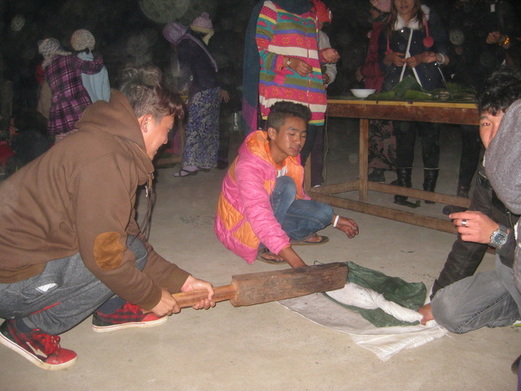
New Years was spent with the kids who delighted in the Kachin tradition of pounding sticky rice to within an inch of it's life, and then  eating copious quatities of the resulting flattened glutinous stuff.
Picture
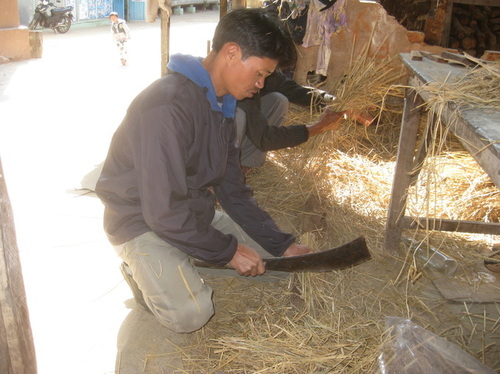
Then it was time to start trainings again. I began in SMOC itself with the same 5 brick stove that I had started to use in Haiti, passed to me by my good friends and mentors, Jon and Flip Anderson. Here we see Noh Noh chopping rice straw that will be mixed with clay to provide the insulation in the brick. Noh Noh has done trainings with me before and he generously provided the clay we needed. It looked good coming out of his rice field, it felt good when being mixed with the straw, but yet again, it proved to be of inferior quality and crumbled when heated to high temperatures. But that wasn't till later.....
In the next picture we see the mud and straw stove performing well - the downfeed working just as intended.
Read More
0 Comments

Burmese Times #6

7/1/2013

0 Comments

 
Lashio

I had made an effort to be in contact with the Metta Development Foundation, which is the largest and most competent of the local NGOs in Myanmar. I had previously met the Director, Sai Sam Kham on a couple of occasions and this year, I was determined to do a joint project with them. We decided on a Stove and PV Training in Lashio, which is the largest town in Northern Shan State, not too far from the border with China.
Picture
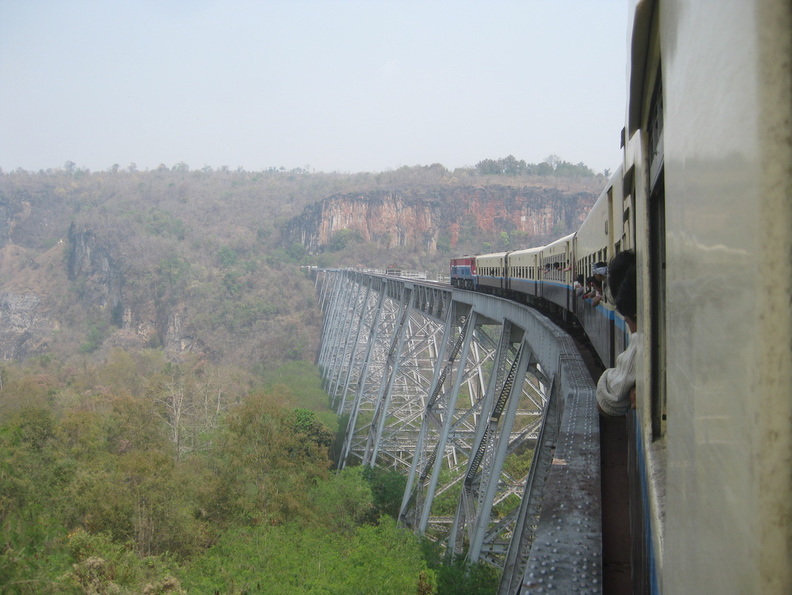
I took a funky train to Lashio that took 11 hours instead of 4 hours by road. It was fun, passing through isolated villages with no road connection. People generously shared their food with me. It was worth doing once.................
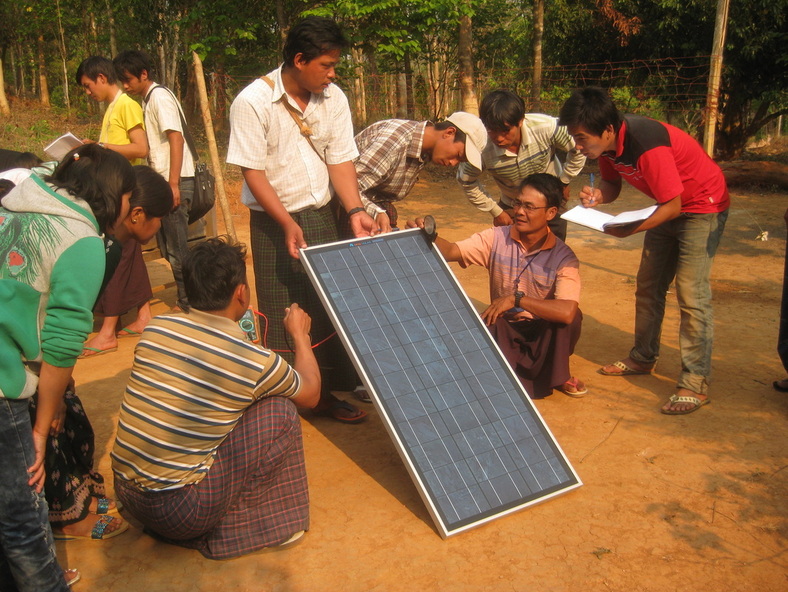
The training lasted 11 days and was held in the Metta demonstration farm, just outside town. Set in 30 acres of forest and paddy fields, this site was perfect. The participants were from all over Myanmar, from Mytkina in the north to Bogalay in the south – I was honored that people had traveled so far to take my training. These participants were a somewhat specialized group in that they were already employed as community activists and technicians. They indeed proved to be a hard group to impress with my renewable bells and whistles, but by the end, I had won them over and they genuinely thanked me for the new knowledge they had gained.
Picture
The students experiment with Orientation and Tilt Angle to optimize solar output
As always, I myself learned some valuable lessons during the training. This time, I discovered that there are better clays than the one I had used at the two Asia Light trainings, which did not produce really strong bricks. Mr Lum Po, the farm manager kindly showed us where the best clay was to be found. It turned out that at the bottom of the irrigation ditches feeding the paddy fields there was a rich black clay and elsewhere there was a an outcrop of thick brown clay. These proved to be far superior to the clays I had used before. Mr Lum Po also showed us some termite hills and knowing that repairs to brick houses in Madagascar were made with termite clay, famed for it's stickiness and strength, I thought I would try that too.

Read More
0 Comments

Burmese Times #4

3/1/2013

0 Comments

 
Soon after arrival in Yangon I was put in touch with Father Benjamin, a Karen priest who runs the Ayerwaddy Homeland project near Myaungmya.  Luckily, he happened to be visiting Yangon, so we were able to meet and we hit it off straight away. Father Benjamin, who stayed for 6 years in France, training and serving his French host community, is a man of keen perception and great awareness of the risks and potentialities facing his small Karen community of 300 souls.
Picture
Father Benjamin with two of three triplets rescued from Cyclone Nargis
Maungmya is located in the northwestern part of the Ayerwaddy Delta and is a very pleasant small regional market town and administrative center. I've been re-reading “Finding George Orwell in Burma” by Emma Larkin and coincidentally, Orwell was posted to Myaungmya for several months in the 1920s. The town still retains many old colonial era buildings and a relaxed back-water atmosphere.
Picture
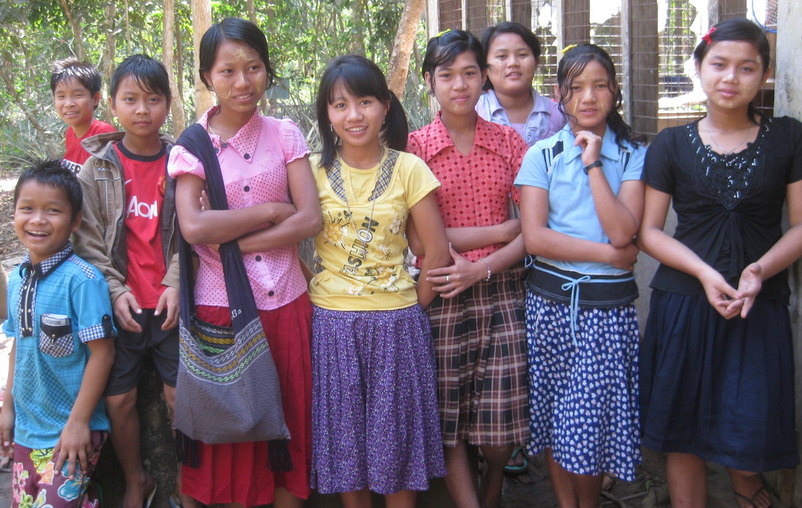
Some of the young folks who live in the forest community. They will soon have a solar light in each of their houses
Father Benjamin started the Ayerwaddy Homeland project over twenty years ago and it's main goal is to provide community livliehood and education while conserving the traditional rural lifestyle through sustainable agriculture. This is a noble task and Father Benjamin is deeply committed to helping his community be as self-sufficient as possible. I visited both the community living in the forest and the hostels for students in Myaungmya and the nearby large port city of Pathein.

Read More
0 Comments

Burmese Times #2

4/1/2012

0 Comments

 
Mandalay

The beauty of the three-syllable name alone conjures up swaying palm trees, exotic scents in the tropical evening breeze and a Shangri-la sense of peace and tranquility. Unfortunately, nothing could be further from the truth. Mandalay is a modern, business-minded city, laid out on a strict grid pattern that is usually dusty and insufferably hot and noisy. As they asked George Best, during his decline from youthful soccer hero to drunkard and buffoon, “where did it all go wrong?” The blame lies largely at the feet of Rudyard Kipling, poet laureate of the British Empire, who composed “The Road to Mandalay”, while spending time in Mawlamyine, a languid port in the south of the country. He never actually visited Mandalay, but that didn’t deter him from placing it on a bay, with a British soldier  waxing sentimental about his Burmese girlfriend and the tinkling temple bells. This poem, later put to music, became a very popular song with the British troops in WW2 and indeed, my father used to sing it with gusto. Perhaps in a case of life imitating art, British troops did indeed take the “Road to Mandalay”, when they returned from India to retake the city from the Japanese in 1945, after some fierce fighting. Bizzarly, the British forces included Idi Amin and President Obama’s grandfather!
Picture
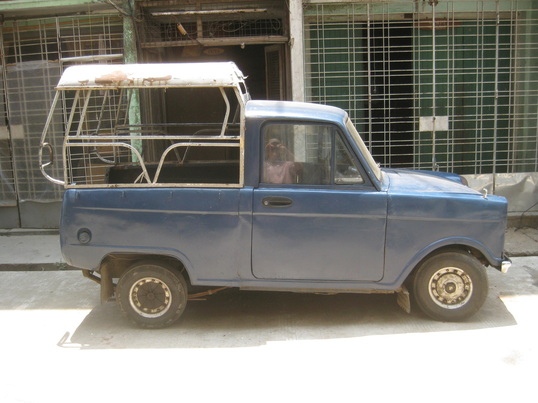
One of Mandalay' common sights, soon to disappear, in the drive towards modernity - it's the Mazda 1960s mini pick-up. Also known to Jim and I as the "Clown Car"
Mandalay had enjoyed a brief period as the capital of Burma, just before the annexation of Upper Burma by British forces in 1885. Several previous, much more ancient capitals , such as Sagaing and Amarapura are located nearby, but they are now dusty backwaters, eclipsed by Mandalay’s rise as the new commercial center of Upper Burma. Commercial ‘epi-center’ might be more apt as Mandalay is the prime destination for much of the Chinese investment in Burma and distribution center for products from China. From only 5% of the population 10 years ago, Chinese residents of Mandalay are now estimated at 20%. Large multi-story hotel blocks are springing up everywhere, new car showrooms proliferate, all financed by Chinese dollars and even Chinese schools are opening for business. Many Burmese are beginning to feel resentment over the power and domination of their neighbor to the North. To adapt the old Mexican adage, “Poor Burma! So far from God, so close to China!”
Picture
An all-action shot of our languid class in Mandalay!

Read More
0 Comments

Burmese Times #3

4/1/2012

1 Comment

 
More PV Courses

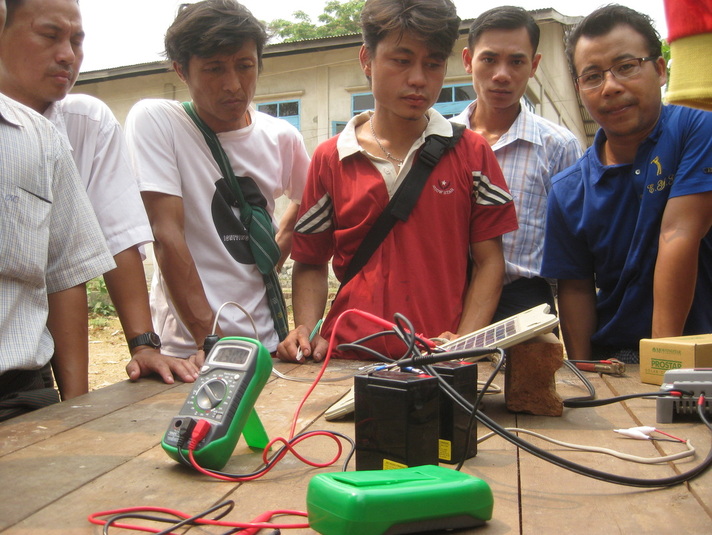
Working with Alin Ein again, I made a visit to their demonstration farm near Mawhbi, about 2 hours north-east of Yangon. They had contracted to have a solar PV system installed by a local company about 6 months ago and it was already having problems. This was a great opportunity for the class to get on their thinking caps and get out their testers. After being gently led through the troubleshooting procedure, the class determined that the battery was badly damaged and would never work again. I replaced the primitive charge controller with a new one from the US, bought a new battery and the system was able to realize its full potential.
Picture
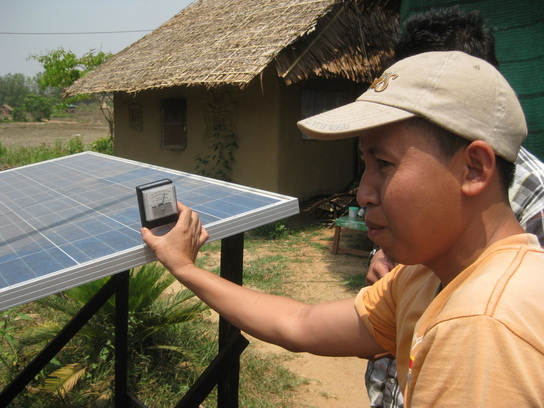
Checking out the solar irradiation level at Mahwbi. Is that the shadow I see on the panel, along with much dust? Tut, tut. I'll have to go over those two items again in class!
Picture
Doing hands-on testing with the Karen students in Toungoo. Looks like serious business!
The following week I went up to Taungoo, near Nay Pyi Daw, the new capital. There I had a large class of over 20 people, several of whom already had solar systems, but who still had many questions. There were the same explanations to be given  around why a car battery will never work well in a solar system and why discharging a battery down to zero is the worst thing you can do to it. These are hard lessons to accept for people who are totally stretched just to buy that old car battery.

Read More
1 Comment

Burmese Times #1

3/1/2012

0 Comments

 
Rangoon
​

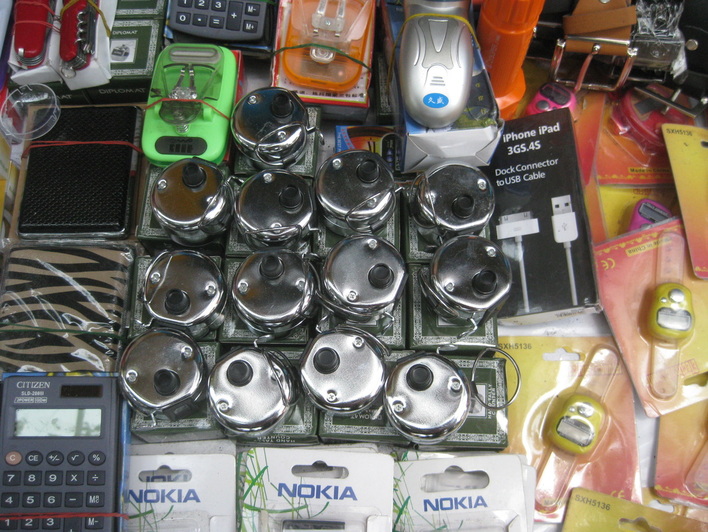
I was thrilled to arrive back in Rangoon, as I had enjoyed it so much when I was here with Jim last year. I stayed at the same Japanese-run guesthouse, ate at the Nepali restaurant, and patronized Nilar’s yoghurt (by-day) and whisky (by night) shop, (I only go during the day!). Downtown Rangoon is a chaotic mess of overcrowded belching buses, broken sidewalks, dilapidated colonial architecture and foul and delicious odors. Street vendors almost block the sidewalk hawking everything from ancient British-era textbooks to as-yet unreleased Hollywood DVDs. However, the item that fascinates me the most is the small mechanical people counter, you know the one with the button and the revolving numbers? Almost every hawker has one or two and some have several models to choose from. Who is buying these things? How many jobs involve counting to the degree that you need a counter that goes up to 999? How many entry level job starters are there in Rangoon that need to buy a new set of clothes, a little set of stacking stainless steel tins for their lunch and a brand new people counter? I sometimes feel I may go to my grave without cracking this particular enigma.
Picture
The ubiquitous people counters hold pride of place at the center of this street vendor's display.
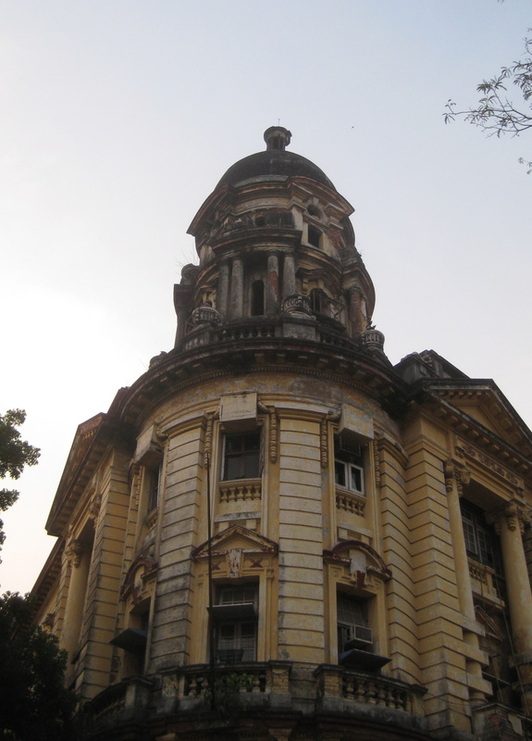
Downtown Rangoon was laid out by the British during their colonial occupation from 1852 till 1947 and there are still many impressive Victorian buildings gently falling down from their former glory as physical expressions of British imperial will. But it is the people that impress most. At the time of Burmese independence in 1947, Rangoon was largely populated by migrants from India, some involuntary, but many seeking opportunity in a less competitive environment. Most left following Independence or in the purges after 1962.  However, the remaining residents of Indian descent still dominate the street culture of downtown, with their restaurants, street stalls, tea houses, temples and mosques. There is, of course, a Chinatown, and that’s where I go to get my solar panels. Rangoon sits on a bend in the Yangon River, which can handle ocean-going ships and it still has many of the warehouses and go-downs from when Brittania ruled the waves. An odd connection for me is that during the colonial period, commerce in Burma was dominated by Scots.  Steel Bros (Rice), The Bombay-Burmah Trading Corporation (Timber), Burmah Oil and The Irrawaddy Flotilla Company were all in Glaswegian hands. It’s a city of glaring contrasts – if you raise your eyes to take in a gleaming new tower, you risk falling 6ft into an open sewer. As Paul Simon so aptly put it, we live in an era of lasers in the jungle!
Picture
One of the many colonial buildings in Rangoon, now mouldering, but soon to find a new lease on life as a hotel or a corporation HQ.

Read More
0 Comments

Eighth Epistle from the Border

3/31/2009

0 Comments

 
PictureTi Lai Pa at sunset
Well, my second trip to the borderlands has just drawn to a close. After a very shaky start, I finally settled in, making friends and work contacts and now I am leaving with a great sense of accomplishment. I will return in January 2010 and I expect to have many new projects to work on.
My Projects
The last month has been a blur of activity, much of it bucketing about in four-wheel drive trucks!  One of the most rewarding undertakings was the training of my assistant Tun Ein. He’s a 24 year-old Burmese refugee who already had some electrical and electronic experience. I was able to pay him while teaching him the essentials of solar installation and maintenance. Luckily, we were able to do three installations together and I feel that Tun Ein will be a big help in the future. First we went back to Ti Lai Pa, which I had visited earlier during the dry season. On that occasion, the journey was a very bumpy 4-hour truck ride, mainly criss-crossing a river bed. This time it was an 8-hour slalom over slippery rivers of mud that used to be roads!  Between the three trucks in the convoy, we got stuck more than twenty times. However, it was all worth it as the new clinic is a substantial hardwood structure with a metal roof, the installation easy and the meals provided by our very grateful Karen hosts were unforgettable. Next we did two installations for the Mon National Health Committee. The first one was in Halokhanee camp for internally displaced persons, just inside Burma. This time I had permission from the Thai authorities and the camp was only two hours from Sangkhla, along a surprisingly smooth dirt road. This camp differs from others I have visited inside Thailand, in that it is more permanent and feels more like a village than a refugee camp. However, the reality is the same. The inhabitants are stuck there, with no prospect of returning to their villages of origin. Again the hospitality was memorable and the fish paste probably the best I have ever tasted! Lastly, we did a system at the Mon clinic at Japanese Well, again just inside Burma. They already have an over-sized generator there, but it is ancient and it has an insatiable appetite for diesel. One innovation we employed in the two Mon clinics was to use 3Watt LED lights in the In-Patient Department and the bathroom. These use so little energy that we can leave them on all night.
Another small job was to re-install the solar array and rework the battery configuration on a 500W solar system belonging to Children of the Forest, children’s home. The system had largely been donated by Annex Power, a Bangkok solar supplier.  Some rather basic mistakes had been made and when I diplomatically pointed these out to Annex, they invited me to come to Bangkok to give a short training to their engineers. It was fun to meet them and get a sense  of the commercial solar scene in another country and I look forward to doing business with them in the future.
One promise I had to make good on was to repair some electrical conduit and wiring at Baan Dada’s. This is a children’s home near Huaymalai, run by Richard, a smiling  Filipino man, with over fourteen years of service on the border under his belt. It was extremely satisfying to tear out the hideous attempt at conduit we found, and replace it with some fine looking pipe. Tun Ein was instructed in the joys of taking pride in one’s work and installing conduit that one could actually pull some wire into!
NawPawlulu
Due to donor cut-backs, Pawlulu is searching for other sources of income. I helped her complete the application for a grant from the Japanese government to set up a sewing project for her patients and local villagers. I hope she gets it. I got the final accounting from Nandoe for the funds I had supplied back in December. The results are impressive. The chicken coup was completed and stocked with eight chickens. The two fish ponds were completed and stocked with one thousand catfish and tilapia. The shop front was completed and is now the smartest boutique in town! The patients all got sandals, blankets, mosquito nets and pillows. And there is $100 left over for future projects. My relationship with Pawlulu and Nandoe was  one of the cherished experiences I take away from this place. I am also taking away a huge stock of hand woven sarongs, bags, cushion covers and scarfs, which I will sell at my fundraising events in early winter.
Whispering Seed
I donated a small solar water pump to the project and paid for most of the construction of a hand dug well to put it on. The rainy season has started and Jim has to worry about getting all his kids and their possessions back into Sangkhla before the flooding river cuts them off. I think the well digging will have wait till next year. Hopefully, by then he will have funding for the large solar system we have been planning.
Next Year
I plan to return in January and continue spreading the solar gospel. In addition to Jim’s  system, I hope to work on a large system for the Mercy Team clinic at Japanese Well. Maybe power a safe house for single mothers there also. Solar hot water, solar cooking and solar food drying are also in my sights

0 Comments

Seventh Epistle from the Border

3/15/2009

0 Comments

 
PictureNovice monk at Ko Mong Ta
​My Projects
I have been very busy visiting villages and setting up projects for the future. Luckily, I have been able to extend my circle of contacts and through them reach out to more remote communities. Recently, I went with a new friend, Mr P’Nong, to revisit the little village of Ko Mong Ta. I had previously visited this village to take in the preparations for the funeral of a well-known Buddhist nun.  This time, I went to look at the solar home systems put in by the Thai government about 4 years ago. Most of them seemed to be still working, despite some obvious Rube Goldberg modifications! But the high points of the visit were sitting quietly in the main hall of the Buddhist monastery for almost two hours, then swimming in the river and going for a long hike with the resident novice monk. Thailand does Buddhism a little differently from other places, (at least judging by their meat intake). When I found a functioning cigarette lighter on the trail and offered it to the young monk, he immediately whipped out an old stogie, and lit it up with relish!
I spent a few days with Jim and family and some folks from Aquaeous Solutions, (a group dedicated to developing sources of clean water), out at Whispering Seed farm. Our task was to build three inter-connected water tanks, using pre-cast concrete rings. I really enjoyed this hard physical work, despite afternoon temperatures pushing 100 degrees F. I was able to using one of my solar powered water pumps to keep the (human) concrete mixers supplied. Also, to cure the cement tanks they had to be filled immediately. The little pump had no problem delivering about 1,000 liters an hour and filling all three tanks in about six hours.
I have three remote clinics to install small solar electric systems on, two of which are for the Mon National Health Committee. They are too far inside Burma for me to venture, so I have hired a solar apprentice, Tun Ein, to do the installations for me. I give him classes every week and I hope that he will be of great help to me in the future. The third system is going to Ti Lai Pa, a magical Karen village I previously visited with Nandoe. I’m told the clinic construction is proceeding apace and now the question is – can I get in there and do the job before the monsoon rains make the road impassable? Since part of Ti Lai Pa is inside Thailand, I can go there and Tun Ein and I can do the installation together, (an essential preparation for him, before tackling the Mon systems by himself).
Tomorrow, I hope to complete the solar hot water heating system at Nawpawlulu’s. Today, we hauled it up onto the roof and now only a few minor plumbing details remain. It’s now the hot season and the demand for piping hot showers is down somewhat, but I hope that from December to February, when the daily temperature swing is about 50 degrees F, my foresight will be appreciated. One of the fun benefits of working at Pawlulu’s has been getting to know some of the people there. Youngsters like Ponatee and Yusip have helped me work on the solar hot water and gradually I have come to know Aye Jo, a 93 year-old youngster! My guess is that he was a Karen soldier, both under the British and during the later Karen insurgency. I look forward to spending more time with him and getting more details on almost a century of life lived along the turbulent borderland.
So it all looks good for the remaining six weeks of my stay. I will be very busy, which is the way I like it. I am making plans to return here for another stint next year. After a sticky start, I have found that the community of both foreigners and local people is very supportive of me and my goals. The hard ground-breaking work  has been done and now I’m in a position to really help local projects and to spread the solar gospel far and wide! 

0 Comments

Fifth Epistle from the Border

2/20/2009

11 Comments

 
PictureThe chicken coop and fish pond being built
​Going into my second month here on the Border, and things are beginning to fall into place.
Regarding projects we are sponsoring, things have been moving ahead:
Napawlulu
I transferred $1,990 to Napawlulu’s account and requested the money be spent on the following items: 1) Warm blankets, mosquito nets and sandals for all 80 people at her Safe House, Children’s Home and Elderly Home. 2) The construction of a new chicken coop and the purchase of 8 hens, a rooster and some starter chicken feed. 4) The completion of the new shop front, which will sell woven items, eggs and hopefully a wider range of products in the future. 5) The construction of a new fish pond for raising cat fish for the patients to eat. It’s amazing how far $2,000 can stretch here. Labor is cheap and materials are expensive. Yesterday I saw two men cutting a tree trunk into planks, using the ancient pit saw method – one guy’s down in a pit, the other is standing on the log, placed across the pit, and they are using a cross-cut saw to cut the planks, a very primitive, extremely labor intensive, technique. As Napawlulu’s  sponsors have told her that her funding will be reduced, and may disappear in some cases, over the next three years, we have been brainstorming around developing new, more local and dependable revenue streams for her project. Ideas include a rice mill, taking in sewing work on a large scale and expanded vegetable and meat/egg production. I will be bringing back about 30 Karen woven sarongs as fundraising items for sale also. The main project we are gearing up for at the moment is an eye operation clinic which Napawlulu offered to host and organize, in just under 3 weeks. Yesterday she and I spent the afternoon cutting up material for the drapes to cover the patient’s faces during the operation. Soon, Nandoe and his son will build the operating tables themselves – again, it’s cheap labor vs expensive finished products. The surgeon is from Germany and spends part of each year doing cataract operations on the Border – such great work!
My projects
I have had great trouble securing some of the materials I need. I have been waiting for 3 weeks already for the black tubing for the solar hot water system at Napawlulu’s. This might necessitate a trip to Bangkok, but I have had the offer of help from a Thai speaker, to make sure I get everything and at a decent price.  My two solar PV panels should arrive this week and that will allow me to start experimenting with the water pumps – what fun!
I visited a remote Karen village called Ti Lai Pa recently, where they will build a small clinic. I offered to install a very basic solar PV system for them, and this will go ahead as soon as the structure has walls and a roof. The village  straddles the border, with the clinic in Thailand and the school in Burma! I hope they get it to a workable point before I have to leave. It is also proposed that I install a small PV system in the orphanage inside the nearest refugee camp, which houses 4,000 people. However, as foreigners, not connected to one of the large aid agencies are not allowed to enter the camp, this seemed a remote possibility. Then it was “suggested” that I could get access if I gave the Thai Border Police a solar panel, ($600 value). I told them that the solar panel wouldn’t work where I “suggested” they stuff it. Welcome to the Border!
I have been working with a group of four Italian actors who are training the kids in Children of the Forest home to put on a performance in a local park. It’s a rework of a Mon legend about the Rabbit on the Moon. I spent all day today getting their lighting and sound system up to snuff. Great people, great fun.
The Sangkhlaburi Roxie is really starting to take off! I’ve shown movies every night this week and will continue to do so, as long as there is interest.
Take care, stay in touch and keep that warm place in your heart open to the folks here on the Border

11 Comments

    Archives

    March 2017
    May 2016
    December 2014
    July 2013
    April 2013
    March 2013
    September 2012
    April 2012
    March 2012
    January 2012
    September 2011
    August 2011
    April 2011
    January 2011
    March 2010
    January 2010
    March 2009
    February 2009
    April 2008
    March 2008

    Categories

    All
    Acme Stove Works
    Agriculture
    Bangkok
    Border Green Energy Team
    Burmese History
    Charcoal Stoves
    Chicken Coop
    Cookstoves
    Deforestation
    Eye Clinic
    Gasifier Stoves
    Haiti
    Haybox
    Health Clinics
    Laos
    Madagascar
    Metta Development Foundation
    Mud Bricks
    Myanmar
    Parabolic Cooker
    Plastic
    Pyin Oo Lwin
    Rocket Stoves
    Solar
    Solar Cookers
    Solar PV
    Solar Roots Training Center
    Solar Thermal
    Solar Water Pasteurizer
    Solar Water Pumping
    St. Matthew's Orphanage Center
    Tanzania
    Thailand
    Training
    Vietnam
    Volunteers

    RSS Feed

    Contact Us

Submit
If you would like to support our work, please send a check, made out to "Solar Roots", to:

Solar Roots, PO Box 2838, Berkeley, CA 94702. 

All donations are tax deductible in the US, to the full extent permitted by law.

Solar Roots is a 501(c)(3)  with the EIN: #37-1618472